

The shareholder’s equity is dependent on the total equity of the company. Thus, a shareholder concerned for his earnings will also be concerned for the company. Let us consider an example to compute the total equity for a company called ABC Limited.
Common Mistakes While Calculating Equity
The company uses this account when it reports sales of goods, generally under cost of goods sold in the income statement. Enter your name and email in the form below and download the free template now! You can use the Excel file to enter the numbers for any company and gain a deeper understanding of how balance sheets work. Total capital provides valuable insights for corporate management when making long-term strategic decisions, such as expansions, acquisitions, or capital investments. It shows how much funding is available to support these initiatives.

What are the Limitations of Total Capital?
- Accounts Payables, or AP, is the amount a company owes suppliers for items or services purchased on credit.
- On the other hand, an investor might feel comfortable buying shares in a relatively weak business as long as the price they pay is sufficiently low relative to its equity.
- It helps them to judge the quality of the company’s financial ratios, providing them with the tools to make better investment decisions.
- This helps achieve financial transparency and builds trust with stakeholders.
- One option is to focus on improving profitability and generating positive cash flows.
- Streamline financial operations with Australia accounting outsourcing.
In the below-given figure, https://againent.co.kr/what-is-record-to-report-process/ we have shown the calculation of the balance sheet. The following is data for calculating the Shareholder’s equity of Apple.Inc for the period ended on September 29, 2018. Above is data for calculating the Shareholder’s equity of company SDF Ltd. The above given is the data for calculating the Shareholder’s equity of company PRQ Ltd. Your financial statements are more than a look at how your business performed in the past.
What Is Stockholders’ Equity?
This foundational principle ensures a balance in the financial statements and helps stakeholders understand the net worth or book value of an entity. Here, equity represents the residual value of the company’s assets after accounting for all its liabilities. Think of it as the «net worth» section of the balance sheet, reflecting what truly belongs to the shareholders.
- This figure arises when investors purchase shares directly from the company for a price greater than the stock’s par value.
- This comparative approach can also highlight industry-specific risks and opportunities that may not be apparent when examining a company in isolation.
- Finally, equity provides a return on investment to shareholders through dividends and capital appreciation.
- Other financial obligations, like leases and pension liabilities, are also part of total debt.
- As market conditions fluctuate, it’s crucial to regularly update and adjust equity figures to reflect the current financial landscape accurately.
Explore More Investment Opportunities
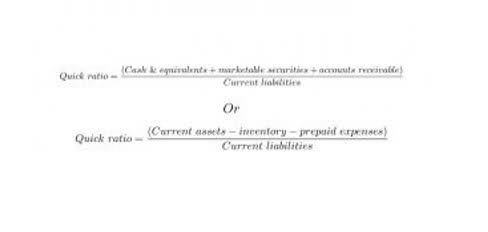
This account may or may not be lumped together with the above account, Current Debt. While they may seem similar, the current portion of long-term debt is specifically the portion due within this year of a piece of debt that has a maturity of more Coffee Shop Accounting than one year. For example, if a company takes on a bank loan to be paid off in 5-years, this account will include the portion of that loan due in the next year.
Common D/E Ratio Analysis Mistakes to Avoid

Financial analysts and investors closely examine a company’s equity to assess its financial stability. A higher equity compared to liabilities generally indicates a stronger financial position. This is because the company has less debt burden and more ownership stake held by shareholders.
For example, a ratio of 2 shows the company owes twice as much as it owns. By using the above calculation, one can calculate the total asset of a company at any point in time. The asset equals the sum of all assets, i.e., cash, accounts receivable, prepaid expense, and inventory, i.e., $234,762 for 2014.
Capital Structure Decisions
A company may have a large total capital base but could still struggle with liquidity issues if its assets are not easily converted to cash. By looking at the debt to equity ratio with economic conditions in mind, we can better understand a company’s finances. When we formula for total equity mess up in calculating the d/e ratio, it’s often because we got debt or equity wrong. To avoid this, we need to check the company’s financial reports carefully. Long-term debt, like bonds and mortgages, is due in more than a year.
Calculation Example
Once the shares have been issued, investors can buy and sell them from each other in the secondary market (how stocks normally trade on an exchange). The ratio helps in evaluating how a company is financing its operations – whether through debt or equity. A balanced capital structure is crucial for long-term growth and sustainability. Investors use total capital to assess the financial stability of a company. A company with a solid total capital base is seen as less risky, while one with excessive debt may be viewed as more volatile.
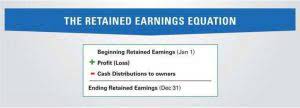
The above formula sums the retained earnings of the business and the share capital and subtracts the treasury shares. Retained earnings are the sum of the company’s cumulative earnings after paying dividends, and it appears in the shareholders’ equity section in the balance sheet. Equity is used as capital raised by a company, which is then used to purchase assets, invest in projects, and fund operations. A firm typically can raise capital by issuing debt (in the form of a loan or via bonds) or equity (by selling stock). Investors usually seek out equity investments as they provide a greater opportunity to share in the profits and growth of a firm. You just divide a company’s total liabilities by its total shareholders’ equity.